
Develop the confidence and practical skills to respond effectively to medical emergencies with our FAE – Basic First Aid course. Designed to meet PHECC standards, this programme equips learners with the knowledge needed to provide immediate care until emergency medical services arrive.
Request Training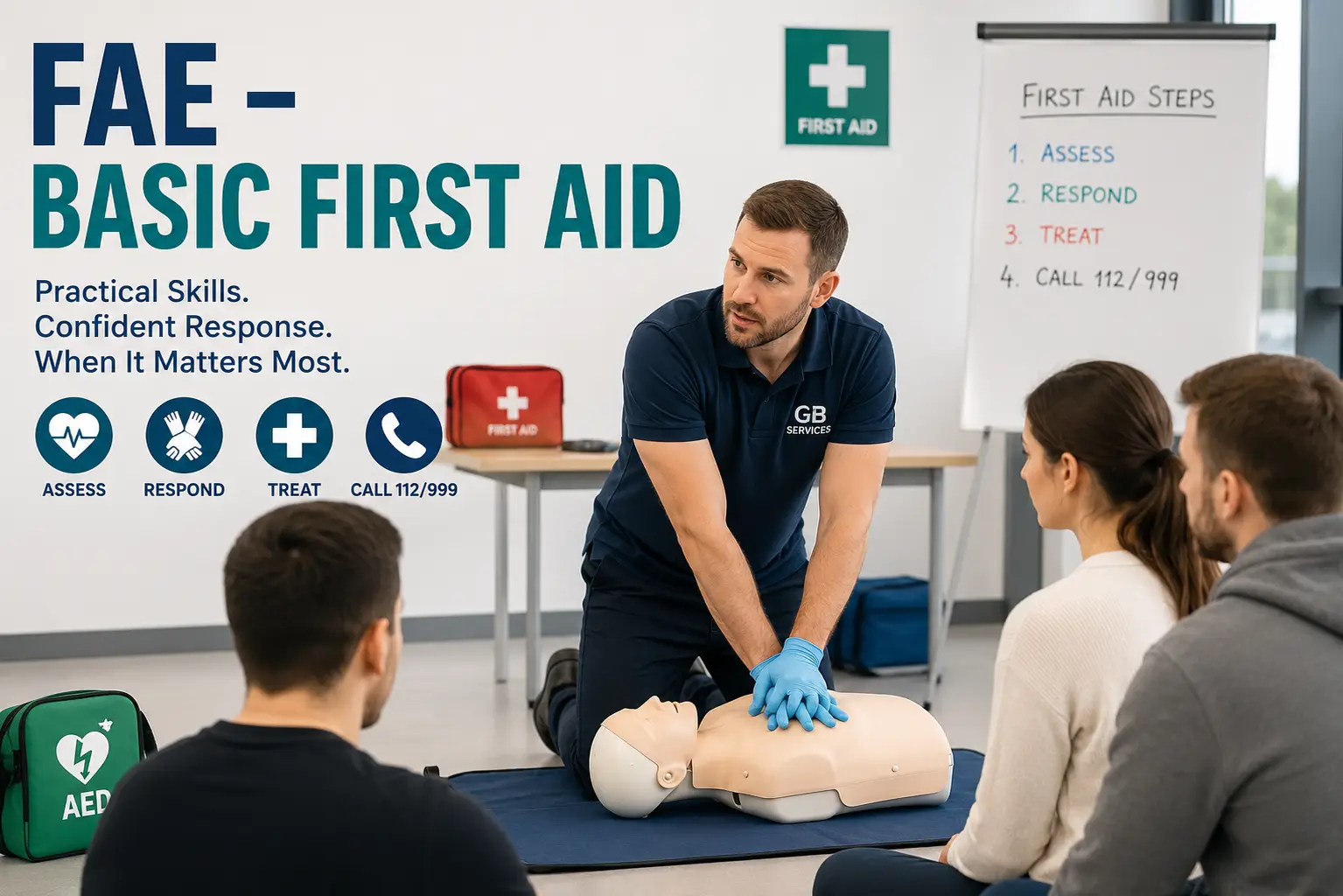
The FAE – Basic First Aid course provides learners with the essential knowledge and practical skills required to recognise and manage a wide range of medical emergencies. Delivered in line with the PHECC Education and Training Standard, the programme combines classroom learning with realistic practical scenarios to prepare participants to respond confidently in emergency situations. Throughout the course, learners will develop the ability to assess casualties, provide life-saving interventions and manage common injuries and illnesses while maintaining their own safety and the safety of others. Practical exercises reinforce key skills, ensuring participants leave with the confidence to apply their learning in real-world situations.
This course is suitable for employees who have been designated as workplace first aiders, organisations wishing to improve emergency preparedness and individuals who require a recognised first aid qualification. It is appropriate for a wide range of sectors including offices, manufacturing, education, retail, hospitality, construction, community organisations and public services.
By the end of the course, learners will be able to assess an emergency scene, recognise life-threatening conditions and provide appropriate first aid in accordance with current PHECC Clinical Practice Guidelines. Participants will develop practical skills in cardiopulmonary resuscitation (CPR), the use of an Automated External Defibrillator (AED), casualty assessment, management of medical emergencies, traumatic injuries and effective communication with emergency services. Learners will also understand the importance of patient care, documentation and maintaining personal safety while responding to emergencies.
The course begins with the mandatory Cardiac First Response (CFR Community) module, where learners develop the confidence to recognise cardiac emergencies, perform high-quality CPR and safely operate an Automated External Defibrillator (AED). Practical scenarios reinforce the importance of early recognition, effective teamwork and rapid intervention to improve patient outcomes.
Learners are introduced to the role and responsibilities of a First Aider, including scene safety, communication, patient consent and relevant legislation. The module also explores recognising abuse or neglect, responder wellbeing and strategies for managing the emotional impact of responding to emergency incidents, helping participants develop a safe and professional approach to first aid.
This module teaches learners how to assess an ill or injured person using structured primary and secondary surveys. Participants practise assessing vital signs, gathering patient history using the SAMPLE mnemonic, identifying potential spinal injuries and communicating effectively with patients while maintaining empathy and professionalism throughout the assessment process.
Learners develop the practical skills required to manage common injuries, including severe bleeding, burns, musculoskeletal injuries and suspected spinal injuries. Through practical demonstrations and hands-on scenarios, participants learn how to provide safe and effective first aid while preventing further harm until emergency medical services arrive.
The final module focuses on recognising and responding to common medical emergencies, including asthma, diabetic emergencies, seizures, anaphylaxis, poisoning, sepsis and fainting. Learners practise assessing patients with altered levels of consciousness and providing appropriate first aid in line with current PHECC Clinical Practice Guidelines, building the confidence to respond effectively in real-life situations.
Ensure you meet the standard base requirements below before enrolling to guarantee an optimal learning experience.
There are no formal entry requirements for this course. Participants should be physically capable of carrying out practical first aid skills, including CPR performed on the floor.
Yes. Most of our training programmes can be delivered at your workplace or chosen venue, helping to minimise disruption while providing learners with practical, relevant training in a familiar environment. Alternative training venues can also be arranged where required.
Where applicable, learners who successfully complete the course and any required assessments will receive the relevant certification from the appropriate awarding body or certification provider. Certification details are listed on each individual course page.
Yes. Many of our courses can be adapted to reflect your organisation's working environment, procedures and industry-specific requirements while maintaining compliance with awarding body and regulatory standards where applicable.
We understand that business requirements can change. Requests to reschedule or cancel training should be made as early as possible. Any cancellation or rescheduling charges will be applied in accordance with the booking terms and conditions provided at the time of confirmation. If you need to make changes to your booking, please contact us as soon as possible and we will work with you to find the best solution.
Enquire today to secure your place or request a custom group booking.
Enquire Now